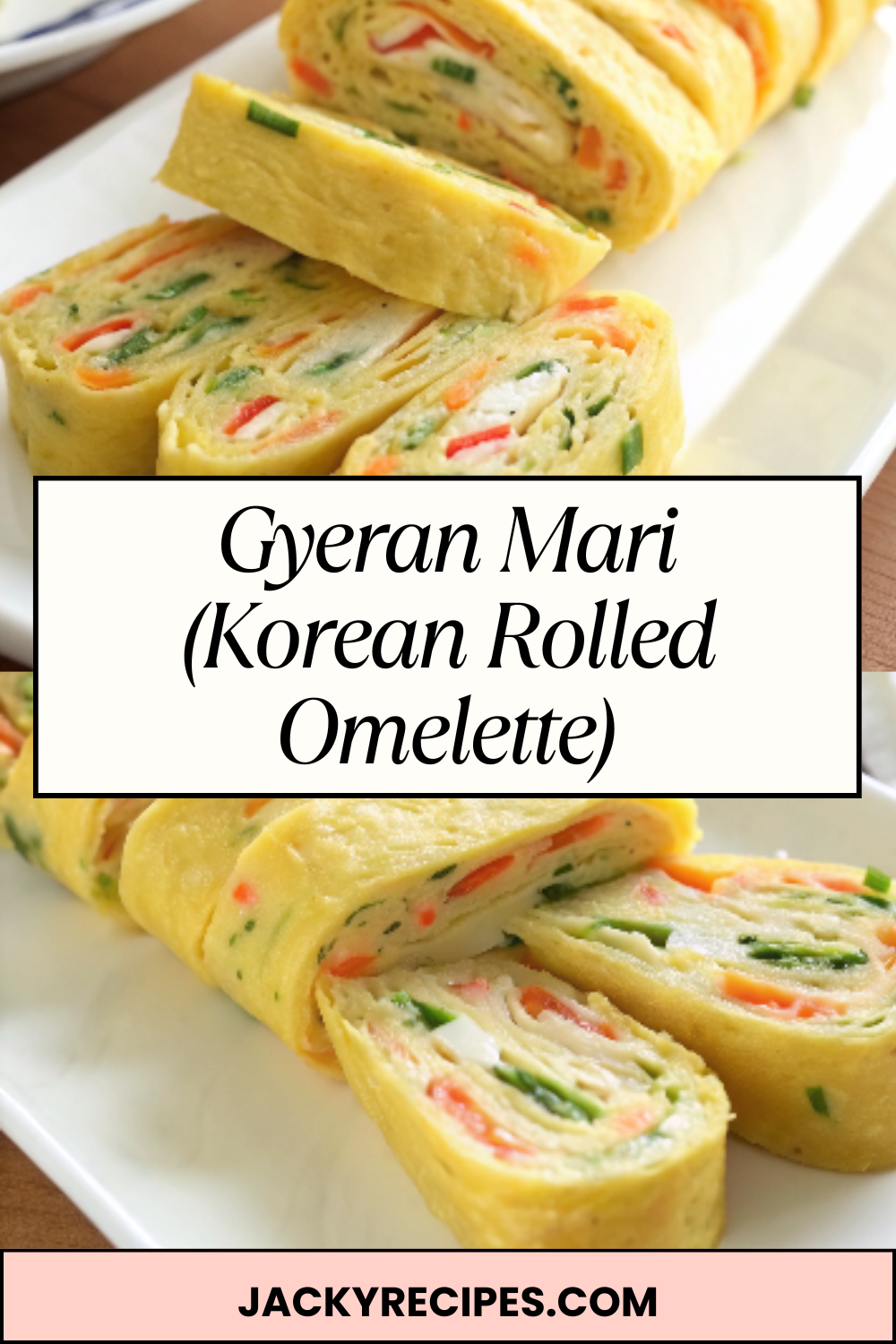
Ingredients
Equipment
Method
Step 1: Prepare the Egg Mixture
- Crack eggs into a bowl.
- Add milk (or water) and a pinch of salt.
- Whisk gently until combined without creating too many bubbles.
Step 2: Add the Vegetables
- Stir finely chopped carrots, green onions, and bell pepper (or zucchini) into the egg mixture.
Step 3: Heat the Pan
- Heat a nonstick pan over low to medium-low heat.
- Lightly oil the pan and wipe off excess with a paper towel.
Step 4: Cook the First Layer
- Pour a thin layer of egg mixture into the pan, tilting to spread evenly.
- Cook until just set but still slightly moist on top.
Step 5: Roll the Omelette
- Starting from one side, gently roll the egg toward the opposite side using a spatula.
Step 6: Add More Egg & Continue Rolling
- Push the rolled egg to one side of the pan.
- Lightly oil the empty space.
- Pour in another thin layer of egg, lifting the roll slightly so the egg flows underneath.
- Once set, roll again over the new layer.
Step 7: Repeat Until Finished
- Repeat the process until all egg mixture is used and a thick roll forms.
Step 8: Shape & Slice
- Gently press the roll with a spatula to square off the edges.
- Remove from pan and let rest for 1–2 minutes.
- Slice into bite-sized pieces.
Notes
🧊 Storage & Reheating
Store in an airtight container in the fridge for up to 2 days.
Reheat gently in a pan or microwave for a few seconds.
Can be eaten cold as a lunchbox item.
🥄 Variations
Cheese Gyeran Mari: Add a thin layer of shredded cheese before rolling.
Seaweed Version: Place a sheet of roasted seaweed on the first egg layer.
Spicy Twist: Add finely chopped chili or chili flakes.
Ham-Free Protein Boost: Add finely chopped cooked chicken or tuna.
Plain Version: Make with eggs only for a minimalist style.
❓ 10 FAQs
Do I need a rectangular pan?
No—a round pan works perfectly. Why cook on low heat?
Low heat keeps the eggs soft and prevents browning. Can I skip milk?
Yes—water works fine. Why is my omelette breaking?
Heat may be too high or eggs too thin—lower heat helps. Can I make it ahead of time?
Yes—great for meal prep and lunch boxes. Is this dish kid-friendly?
Absolutely—mild, soft, and easy to eat. Can I freeze it?
Not recommended—the texture changes. What vegetables work best?
Finely chopped carrots, zucchini, onions, and peppers. How do I get clean slices?
Let it rest briefly before cutting. Is this served as a main or side?
Typically a side dish, but it can be a light main. 🏁 Conclusion
Gyeran Mari is a simple yet elegant Korean classic that transforms everyday eggs into something special. Soft, savory, and endlessly customizable, this rolled omelette is perfect for breakfast, bento boxes, or as a comforting side dish. Once you master the rolling technique, it’s a recipe you’ll return to again and again.
No—a round pan works perfectly. Why cook on low heat?
Low heat keeps the eggs soft and prevents browning. Can I skip milk?
Yes—water works fine. Why is my omelette breaking?
Heat may be too high or eggs too thin—lower heat helps. Can I make it ahead of time?
Yes—great for meal prep and lunch boxes. Is this dish kid-friendly?
Absolutely—mild, soft, and easy to eat. Can I freeze it?
Not recommended—the texture changes. What vegetables work best?
Finely chopped carrots, zucchini, onions, and peppers. How do I get clean slices?
Let it rest briefly before cutting. Is this served as a main or side?
Typically a side dish, but it can be a light main. 🏁 Conclusion
Gyeran Mari is a simple yet elegant Korean classic that transforms everyday eggs into something special. Soft, savory, and endlessly customizable, this rolled omelette is perfect for breakfast, bento boxes, or as a comforting side dish. Once you master the rolling technique, it’s a recipe you’ll return to again and again.